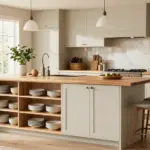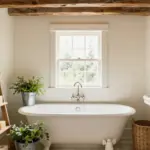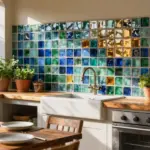
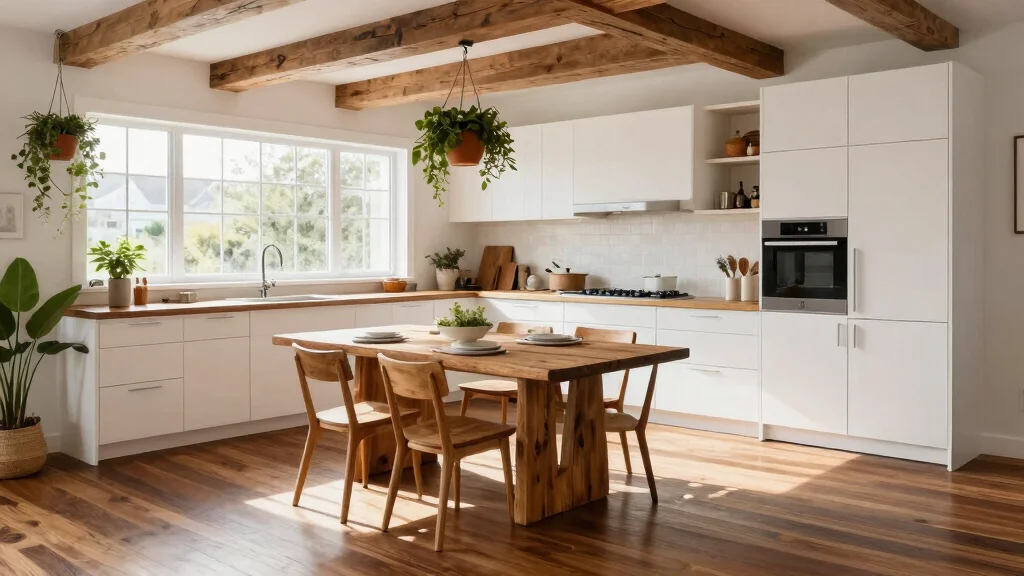
If you’ve been dreaming of a kitchen that’s warm, inviting, and effortlessly stylish, then you’re in the right place. The right flooring can make all the difference in creating that cozy atmosphere. This post dives deep into 12 kitchen wood flooring ideas that not only elevate your cooking space but also add a touch of natural warmth. As seasons change, so does our craving for a home that feels just right. You might find yourself longing for textures and tones that bring comfort and character to your kitchen, especially as trends shift towards more sustainable options.
If you’re someone passionate about home decor and eco-friendly living, you’ll appreciate these flooring ideas that resonate with both style and sustainability. From rustic kitchen flooring to the latest in hardwood kitchen ideas, there’s something for everyone. I’ve put together a variety of options that are not just beautiful but also practical for everyday use, ensuring they hold up against spills, splashes, and the hustle of daily kitchen life.
By exploring these options, you’ll discover eco-friendly flooring options that suit your aesthetic and lifestyle. Whether you want to embrace warm wood tones or explore the latest kitchen design trends, this guide will help you create a space that feels like home. Get ready to transform your kitchen into a haven of warmth and style with these inspiring wood flooring ideas.
Key Takeaways
– Explore sustainable options like bamboo and cork flooring that offer eco-friendly benefits while enhancing your kitchen’s appeal.
– Reclaimed wood planks provide a rustic touch and unique character, making your kitchen stand out.
– Solid and engineered hardwood flooring are both excellent choices, combining durability with timeless beauty.
– Discover various wood tones, from light to dark stained finishes, to find the perfect match for your kitchen decor.
– Incorporate trendy patterns like herringbone or mixed wood elements to add depth and interest to your flooring design.
1. Sustainable Bamboo Flooring
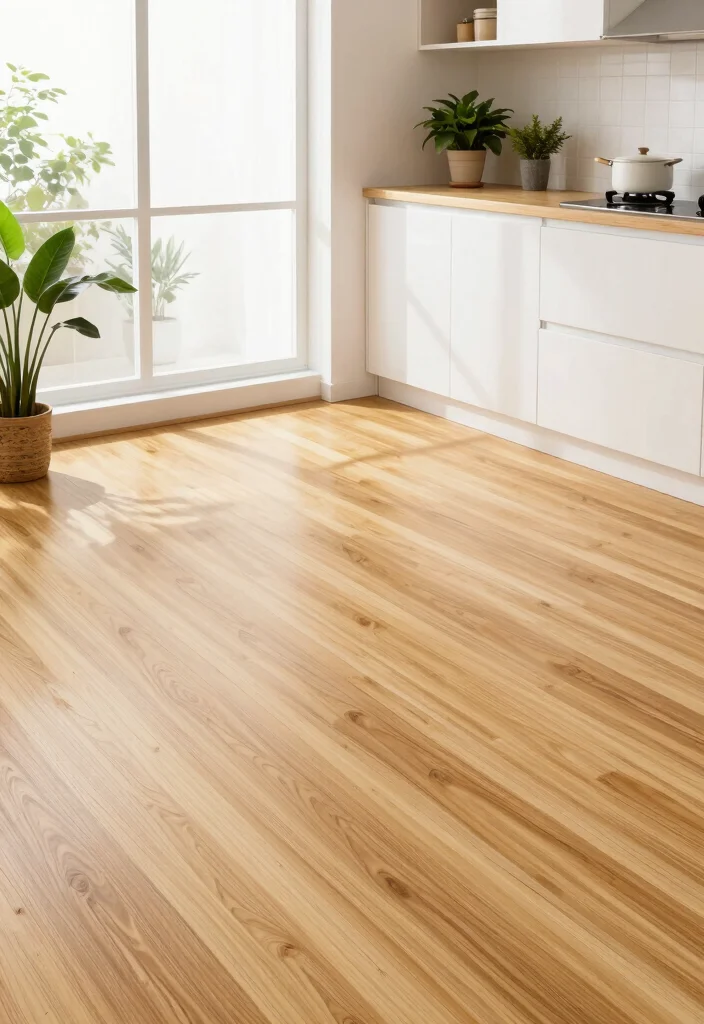
When considering eco-friendly flooring for your kitchen, sustainable bamboo stands out as a top choice. Its rapid growth makes it a renewable resource, bringing a unique blend of beauty and durability that complements any design style. The natural sheen of bamboo, along with its warm tones from light wheat to deep caramel, adds a soothing warmth to your kitchen. Imagine pairing bamboo flooring with natural wood cabinets for a seamless and inviting atmosphere.
This flooring is not only stylish, but it’s also practical. Bamboo’s resistance to moisture and pests makes it ideal for high-traffic kitchen areas. For those on a budget, consider laminate options that mimic bamboo’s beauty without the higher cost.
Key Benefits: – Pair bamboo with light cabinetry for a fresh look.
– Install bamboo mats to enhance comfort underfoot.
– Use area rugs to define spaces without overwhelming the design.
Choosing bamboo flooring creates a harmonious space while showcasing your commitment to sustainability and style.
Key Trade-offs & Our Top Pick
When choosing the right kitchen wood flooring, it’s essential to weigh the pros and cons of each option. Here we break down three popular choices to help you make an informed decision.
Sustainable Bamboo Flooring
– Pros:
– Eco-friendly and rapidly renewable material.
– Offers a unique, modern look with natural patterns.
– Highly durable and resistant to scratches.
– Cons:
– Can be more expensive than traditional hardwood.
– Limited color options compared to other wood types.
– Sensitive to humidity, which can cause warping.
– Best for: Environmentally-conscious homeowners looking for a sleek, contemporary style.
Engineered Wood Flooring
– Pros:
– Made of multiple layers for enhanced stability.
– Less expensive than solid hardwood while still providing a wood finish.
– Available in various styles and finishes.
– Cons:
– Not as durable as solid hardwood and can be prone to scratching.
– Cannot be sanded down as many times as solid wood.
– Some may find it less appealing than natural wood.
– Best for: Budget-conscious renovators seeking the look of hardwood without the high price tag.
Cork Flooring
– Pros:
– Naturally hypoallergenic and antimicrobial.
– Provides excellent insulation and sound absorption.
– Comfortable underfoot, reducing fatigue.
– Cons:
– Vulnerable to water damage if not sealed properly.
– Can fade in direct sunlight over time.
– Limited style options might not fit all kitchen designs.
– Best for: Families or individuals looking for a unique, warm feel with added comfort.
Expert Recommendation:
Best Overall: Engineered Wood Flooring
Engineered wood flooring stands out as the best option for most people. It combines affordability with a wood-like appearance, making it a popular choice in modern kitchens. You can enjoy the warmth of wood tones without breaking the bank. Plus, its variety in styles means you can find something that matches your kitchen design trends perfectly. Its durability makes it suitable even for busy kitchens, ensuring it withstands everyday wear and tear.
Why We Picked This:
While engineered wood flooring is our top pick, different preferences exist. If you prioritize eco-friendliness, sustainable bamboo flooring may be more appealing. On the other hand, if comfort and acoustics are essential for your family, cork flooring could be the better choice. Each option has its unique benefits and drawbacks, allowing you to select the perfect wood flooring for your kitchen.
2. Reclaimed Wood Planks
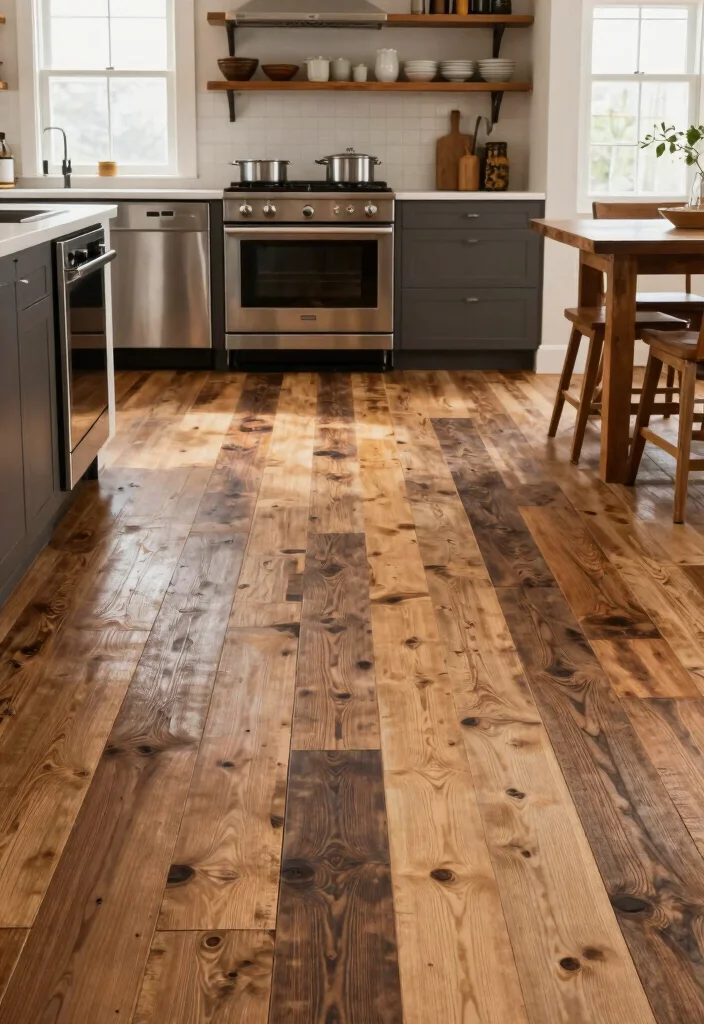
Reclaimed wood planks bring a story and character to your kitchen that new materials simply can’t match. Sourced from old barns and factories, each piece has its own unique history, adding warmth and charm to your space. Imagine the rustic appeal as you incorporate these planks into your kitchen design, creating a cozy atmosphere perfect for family gatherings.
To make the most of reclaimed wood, ensure it is properly treated to withstand kitchen conditions. Mixing various wood types can enhance the layered look, making your kitchen truly one-of-a-kind. Look for local suppliers or online marketplaces for budget-friendly options.
Unique Insights: – Embrace the individuality of each plank for a personalized touch.
– Utilize reclaimed wood to promote sustainable living.
Reclaimed wood flooring not only enhances your kitchen’s aesthetic but also sparks conversations about its rich past.
3. Cork Flooring
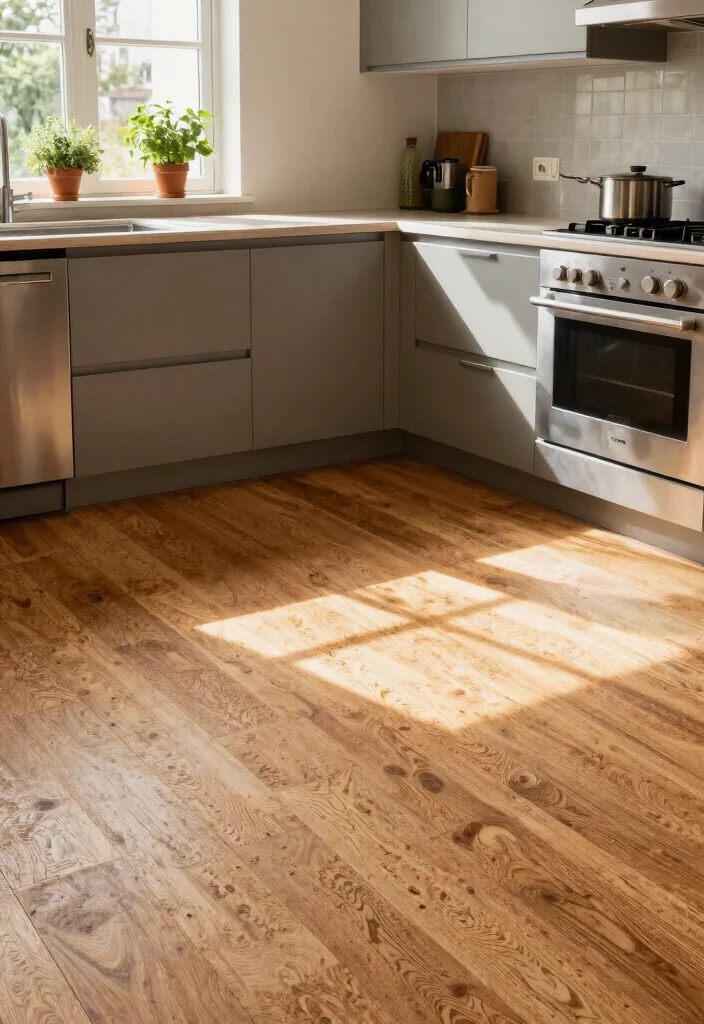
Cork flooring is a fantastic, eco-friendly choice that adds comfort and style to your kitchen. Sourced from the bark of cork oak trees, it offers a soft, cushioned surface that feels great underfoot. Its natural warmth and unique appearance, available in various shades, can beautifully complement any kitchen decor. Imagine cooking or entertaining on a floor that feels as good as it looks!
This flooring option excels in sound insulation and temperature regulation, making your kitchen a pleasant environment year-round. For a cost-effective approach, look for cork tiles that are easy to install yourself.
Health Benefits: – Incorporate cork for a hypoallergenic space.
– Choose cork to resist mold and mildew effectively.
Cork flooring not only enhances the beauty of your kitchen but also contributes to your overall wellness.
Fun fact: Cork flooring is one of the kitchen wood flooring ideas—harvested from the bark of cork oak trees and renewable, reducing waste. It also reduces kitchen noise by up to 32% and stays warm underfoot.
4. Solid Hardwood Flooring
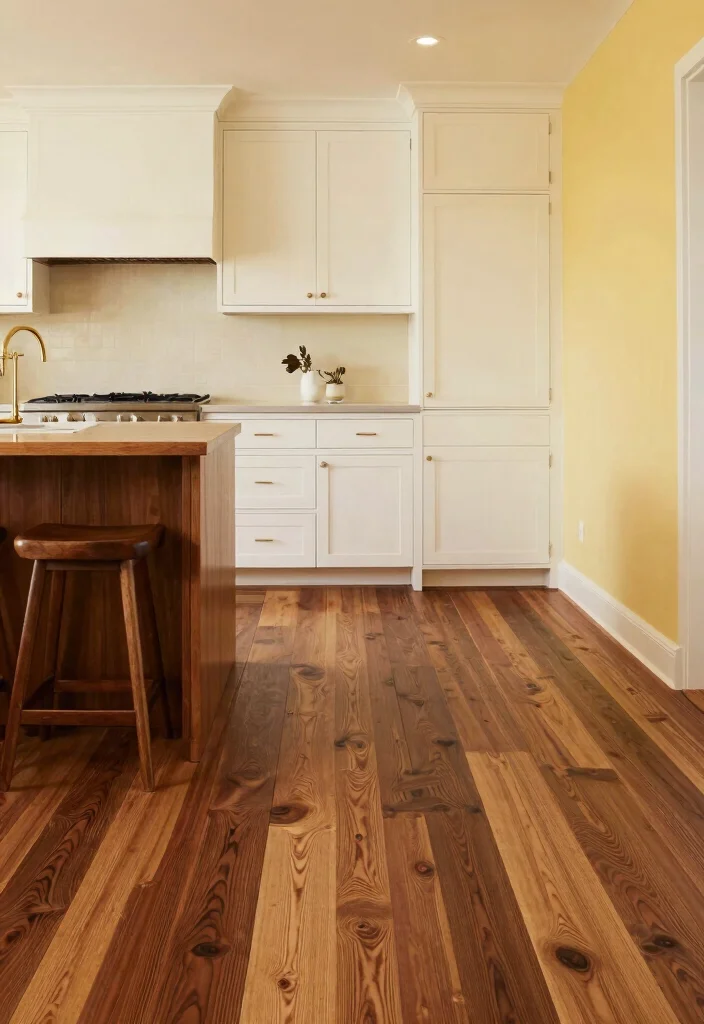
Solid hardwood flooring offers a classic, timeless beauty that elevates any kitchen design. With a variety of wood species available, you can select the perfect grain and color to match your aesthetic. Rich oak, warm maple, and deep cherry all bring unique character, complementing both traditional and contemporary styles. Imagine walking on a beautiful, durable floor that only gets better with age!
While solid hardwood requires regular maintenance, its ability to be sanded and refinished means it can adapt to changing trends. Consider choosing wider planks to create an open, spacious feel in your kitchen.
Design Trends: – Pair dark stained wood with light cabinets for contrast.
– Opt for wide planks to enhance visual space.
Solid hardwood flooring is an investment that adds elegance and longevity to your kitchen.
Solid Hardwood Flooring
Editor’s Choice




5. Engineered Wood Flooring
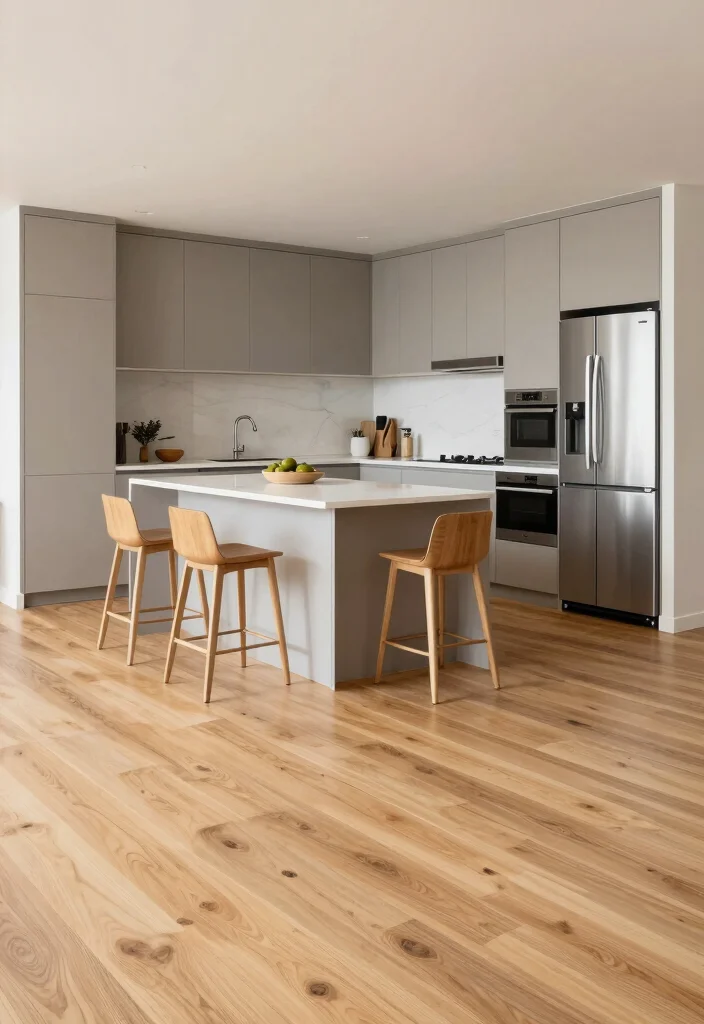
Engineered wood flooring combines the beauty of real wood with enhanced durability, making it an appealing choice for kitchens. With a real wood veneer on top of a sturdy plywood base, this option is less susceptible to moisture and temperature changes. Available in a wide range of finishes and wood species, it can fit any design theme effortlessly. Imagine transforming your kitchen with a floor that’s both beautiful and practical!
Installation is straightforward, making it a great option for DIY projects. For those looking to save, engineered wood can often be placed over existing flooring, minimizing renovation costs.
Benefits: – Choose engineered wood for versatile installation.
– Enjoy stability that minimizes warping over time.
Engineered wood allows you to enjoy the elegance of wood flooring without compromising on practicality.
Engineered Wood Flooring
Editor’s Choice


6. Vinyl Plank Flooring
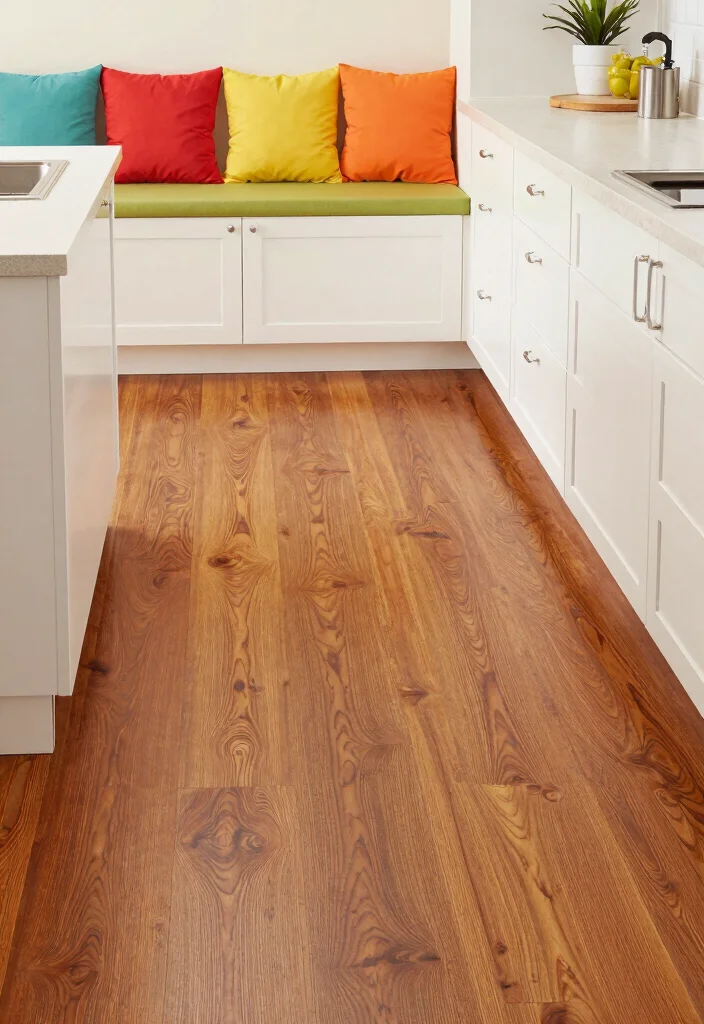
Vinyl plank flooring provides an ideal solution for those who desire the look of wood without the hefty price tag. This budget-friendly option mimics natural wood’s beauty while offering exceptional durability and easy maintenance. Imagine a kitchen where spills and stains are no longer a worry, thanks to vinyl’s resistance to everyday wear.
With modern designs available in various colors and textures, vinyl can fit seamlessly into any kitchen style. It’s also softer underfoot, making it a comfortable choice for long cooking sessions.
Key Features: – Opt for vinyl for an affordable, stylish look.
– Choose DIY-friendly options for easy installation.
Vinyl plank flooring allows you to achieve a chic kitchen vibe without stretching your budget.
Fun fact: Vinyl plank flooring can deliver a wood-look you love at up to 60% less cost than hardwood. It’s durable, spill-resistant, and so easy to maintain—perfect for busy kitchens. When you want warmth from kitchen wood flooring ideas, vinyl makes it doable.
7. Distressed Wood Flooring
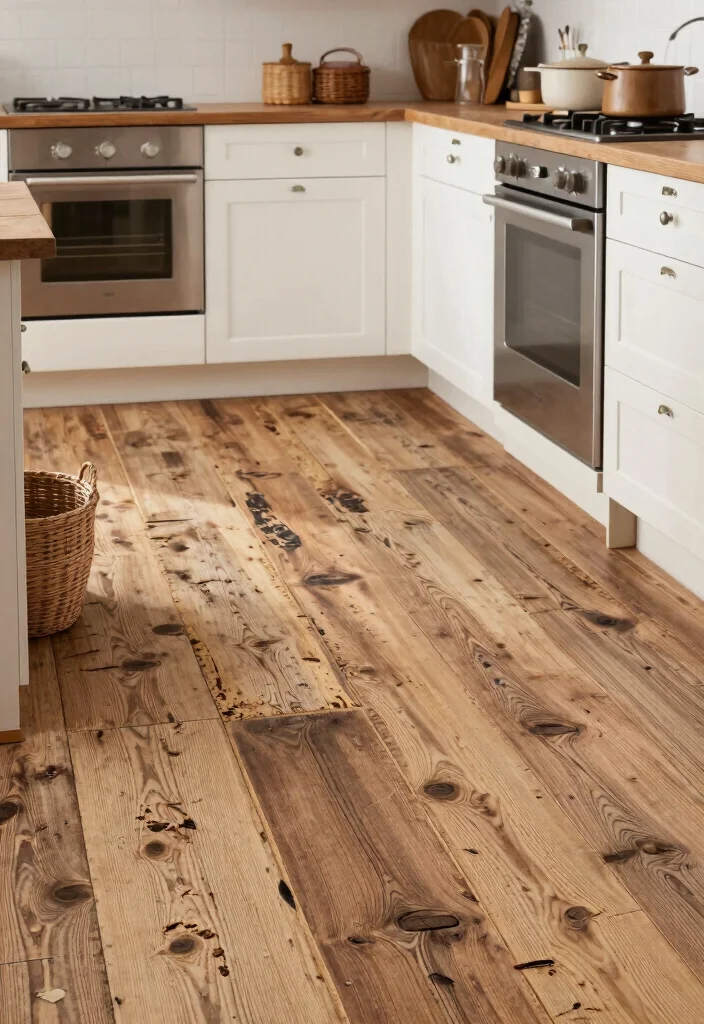
If you’re drawn to rustic aesthetics, distressed wood flooring may be your perfect match. This style highlights the natural imperfections of wood, such as knots and grains, giving your kitchen a cozy, lived-in feel. Perfect for farmhouse designs, distressed wood can fit various styles, inviting warmth and charm into your space.
The unique finish not only adds visual interest but also cleverly masks scratches and dents, making it practical for busy families. Consider mixing different shades and textures to achieve a dynamic and inviting look in your kitchen.
Charming Aesthetic: – Embrace the vintage appeal for a rustic vibe.
– Celebrate the character of each plank for uniqueness.
Distressed wood flooring creates an inviting atmosphere, perfect for gathering and making memories.
8. Light Wood Tones
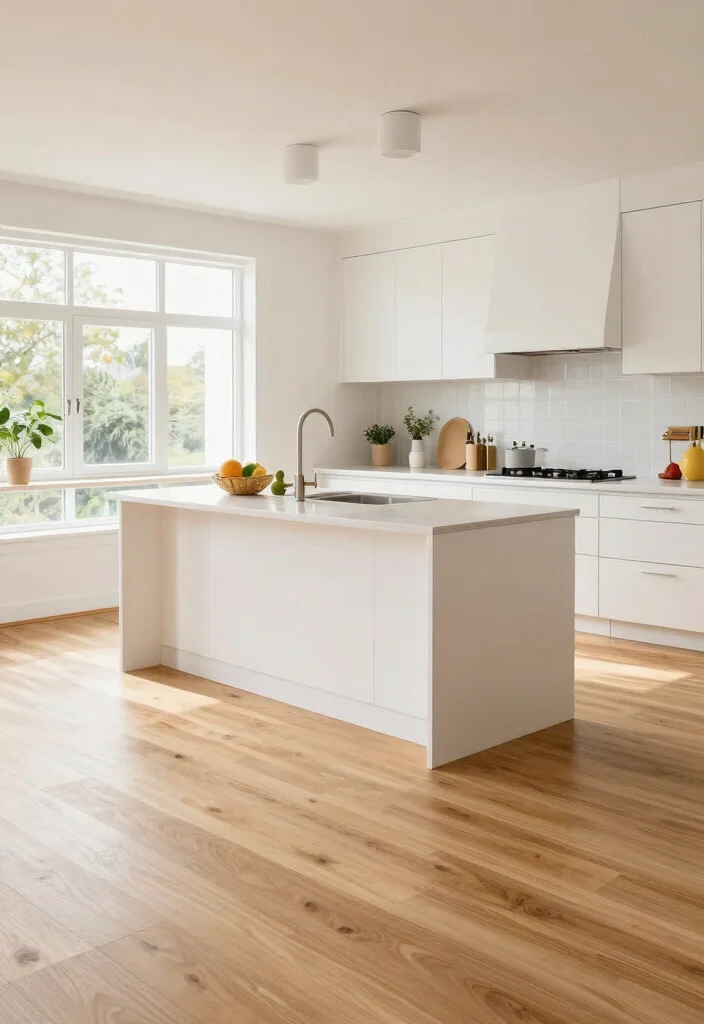
Light wood tones are trending in kitchen design, offering an airy and spacious feel. Woods like ash, maple, and birch can brighten up your kitchen, creating an open atmosphere that feels welcoming. This flooring style pairs beautifully with minimalist and contemporary decor, allowing for endless design possibilities.
Light wood brings warmth to your space without overwhelming it, especially when combined with white cabinetry or bold accents. Imagine the fresh, modern look this combination can create in your home!
Design Tips: – Pair light woods with vibrant colors for a striking contrast.
– Use natural textures like stone to add depth.
Light wood tones create a bright, inviting kitchen that complements today’s lifestyle beautifully.
9. Dark Stained Wood
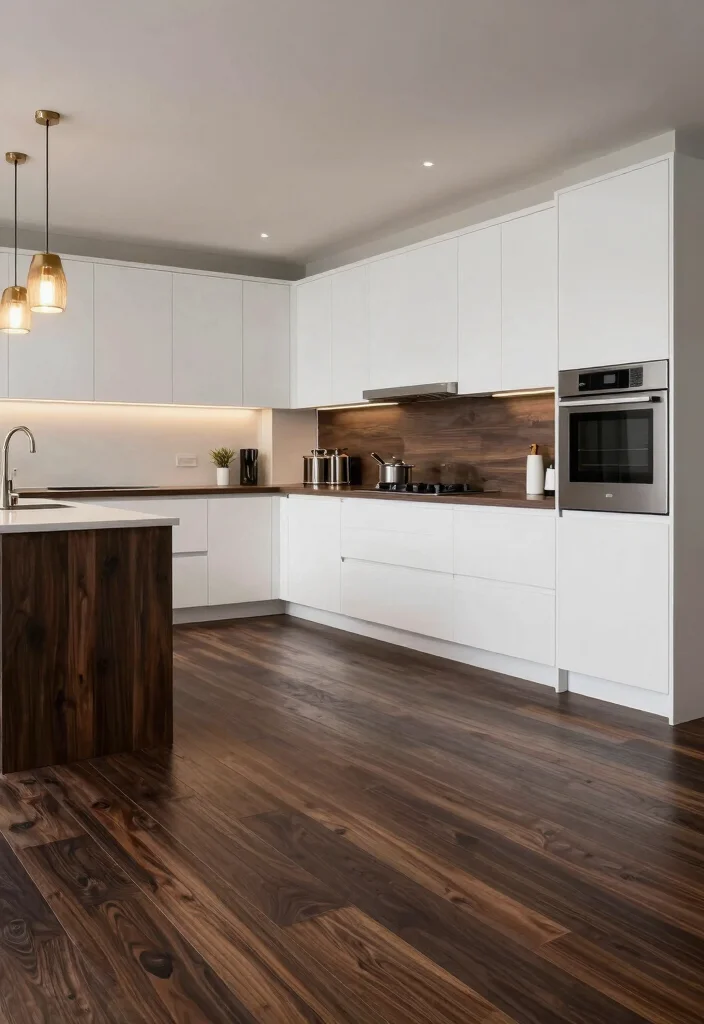
Dark stained wood flooring is making waves in kitchen design, adding a touch of elegance and sophistication. The rich hues create a stunning contrast with lighter cabinetry and appliances, grounding the space and providing a luxurious feel. Imagine how dark wood can enhance warmth in an open-concept design, making your kitchen a cozy gathering spot.
This flooring option effectively hides dirt and scratches, making it a practical choice for busy families. The depth of color can elevate your kitchen’s style while providing a stable foundation for your design.
Design Insight: – Contrast dark wood with lighter decor for a dramatic effect.
Dark stained wood offers a refined look that enhances any kitchen while providing functionality.
10. Scandinavian Inspired Wood Floors
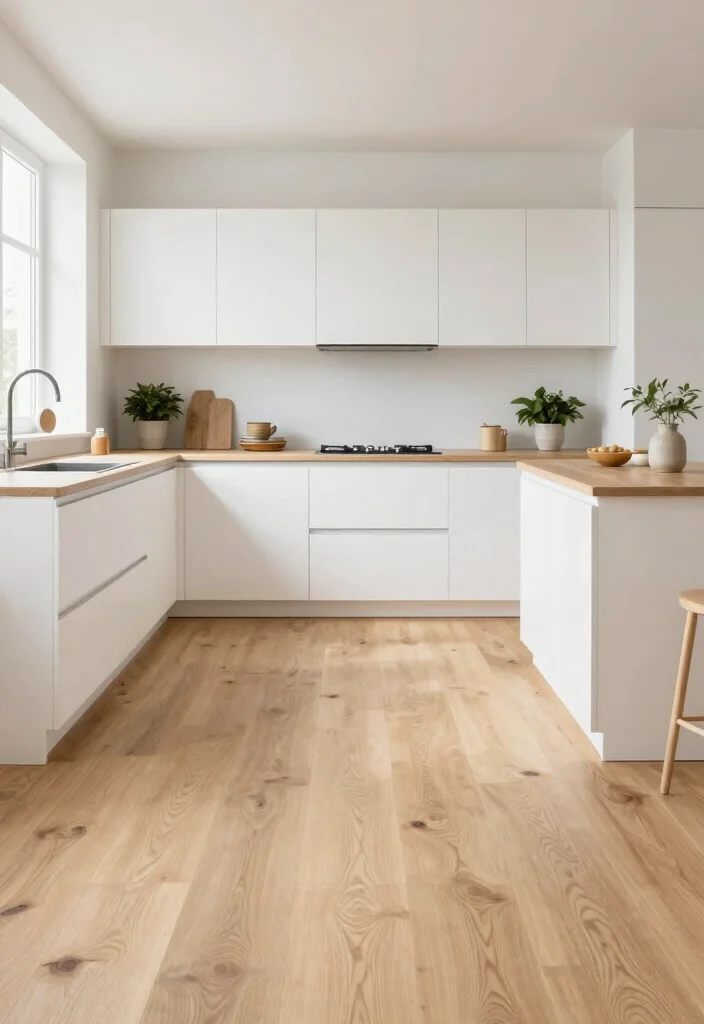
Scandinavian design, known for its simplicity and connection to nature, offers a perfect foundation for eco-friendly kitchens. Light-colored woods with minimal grain create a clean, modern aesthetic that exudes tranquility. Imagine a space where family and friends gather, surrounded by the warmth and simplicity of Scandinavian-inspired wood flooring.
This style allows for flexibility in decor, letting you incorporate various textures and colors effortlessly. Pairing natural elements, like plants and woven baskets, enhances the overall aesthetic of your kitchen.
Design Tips: – Use light colors to brighten up your kitchen space.
– Integrate natural elements for added warmth.
Scandinavian inspired wood floors create a timeless, stylish kitchen that feels both serene and inviting.
Scandinavian-inspired wood floors prove simplicity can feel warm and luxe. Light-colored woods with minimal grain keep kitchen wood flooring ideas calm, while natural textures invite everyday gatherings. Style your eco-friendly space by layering natural elements—it’s practical, flexible, and ready for family moments.
Scandinavian Inspired Wood Floors
Editor’s Choice


11. Herringbone Wood Patterns
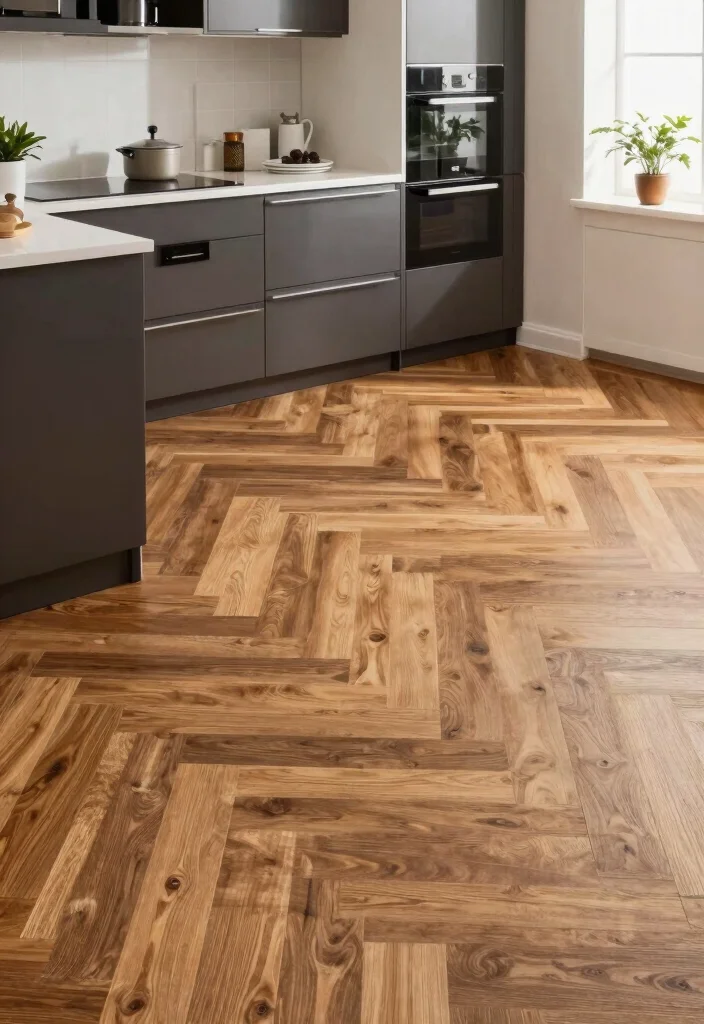
For a standout feature in your kitchen, consider herringbone wood patterns. This geometric design adds texture and visual interest, transforming standard wood flooring into a captivating feature. Imagine creating a dynamic and inviting kitchen with a herringbone pattern that draws the eye and adds character to your space.
This unique installation can make a smaller kitchen feel larger and more inviting, perfect for open-concept designs. Pairing contrasting colors enhances the dramatic effect even further.
Installation Tips: – Hire a professional for precise herringbone installation.
– Choose contrasting wood colors for added impact.
Herringbone wood patterns elevate your kitchen’s style, making it a fashionable focal point.
Herringbone Wood Patterns
Editor’s Choice




12. Mixed Wood Elements
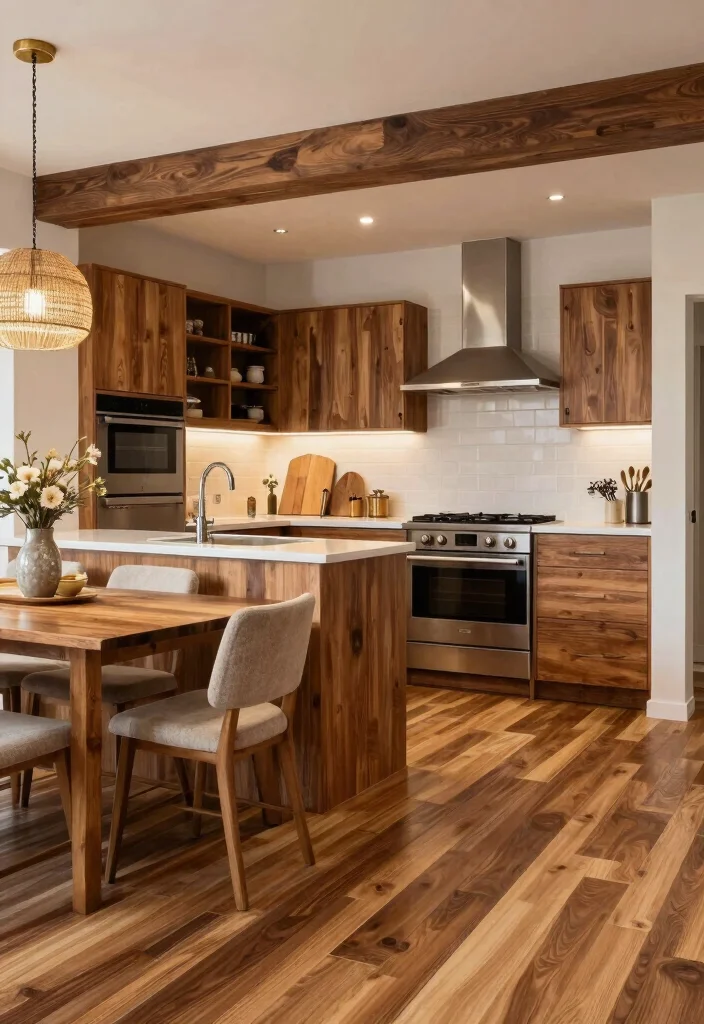
Mixing different wood types and tones creates a rich, layered look that adds personality to your kitchen. Combining light and dark woods or various species can bring depth and interest, allowing you to express your unique style. Imagine a kitchen where thoughtful selections create distinct zones while maintaining a cohesive feel.
This eclectic approach can highlight different areas without feeling overwhelming, creating a welcoming space. By integrating natural textures like stone or metal, you can enhance the overall aesthetic further.
Design Tips: – Use a consistent color palette to unify diverse woods.
– Incorporate natural materials for added depth and interest.
Mixed wood elements allow for artistic expression, turning your kitchen into a one-of-a-kind haven.
Mixed Wood Elements
Editor’s Choice


Conclusion
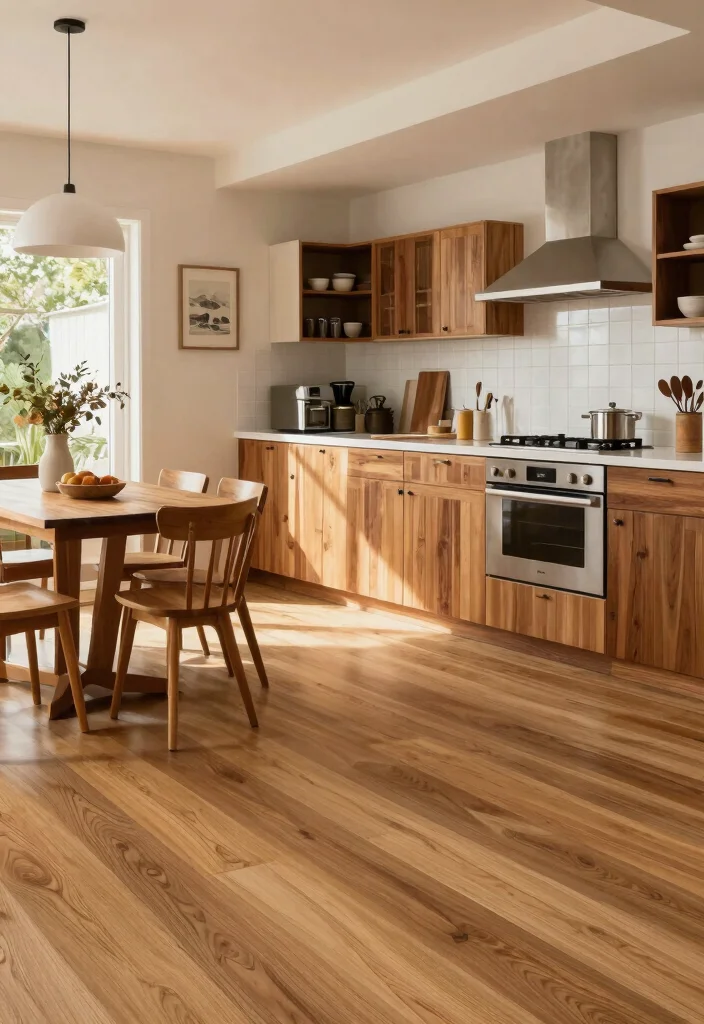
Choosing the right kitchen wood flooring is a significant step in creating a warm and inviting atmosphere. With so many eco-friendly options available, it’s easier than ever to find a style that fits both your aesthetic and your values. From sustainable bamboo to chic herringbone patterns, each flooring idea contributes to the overall warmth and character of your kitchen.
As you consider your options, remember that the perfect flooring can enhance not just the look but also the functionality of your space. Explore these ideas and find the one that resonates with your vision for a cozy kitchen.
Note: We aim to provide accurate product links, but some may occasionally expire or become unavailable. If this happens, please search directly on Amazon for the product or a suitable alternative.
This post contains Amazon affiliate links, meaning we may earn a small commission if you purchase through our links, at no extra cost to you.
Frequently Asked Questions
What are the best kitchen wood flooring ideas to add natural warmth?
Here are practical kitchen wood flooring ideas to bring natural warmth to your space:
Start with warm wood tones like European oak, maple, or hickory in wide planks for a cozy, rustic kitchen flooring look or a classic, timeless feel.
Texture matters: choose rustic kitchen flooring textures (hand-scraped or brushed) to add depth and character while hiding minor scratches.
Go for eco-friendly flooring options by selecting FSC-certified wood and low-VOC finishes to keep the air clean.
Engineered hardwood often performs better in kitchens than solid wood, and a durable matte or satin finish helps protect color and warmth over time.
Finish with warm lighting and area rugs in high-traffic zones to enhance the cozy vibe.
These tips align with current kitchen design trends while keeping the project sustainable.
Which eco-friendly options still deliver the look of warm wood in a kitchen?
There are several eco-friendly kitchen wood flooring ideas that nail the look without harming the planet:
Reclaimed wood with natural patina provides instant character and is a standout eco-friendly flooring options choice.
Engineered hardwood from responsibly managed forests offers warmth with improved moisture resistance for kitchens, a smart pick for kitchen wood flooring ideas.
Consider bamboo or other rapidly renewable materials that mimic warm tones and are marketed as eco-friendly flooring options.
Always choose low-VOC finishes to maintain indoor air quality while preserving the warm, natural look.
When in doubt, aim for tones that align with current kitchen design trends.
How should I care for and maintain kitchen wood flooring to keep warmth and finish over time?
Caring for kitchen wood flooring is simple and keeps warmth alive:
Dust or sweep daily to prevent grit from scratching the surface, and wipe spills immediately with a soft, damp cloth.
Use doormats and felt pads under furniture to protect high-traffic areas and prevent dents.
Maintain humidity around 35–50% to minimize cupping or gaps in the wood.
Clean with a pH-neutral, wood-friendly cleaner and avoid steam systems or harsh detergents.
Refinish or reseal every few years (depending on wear) to keep warm wood tones and finish looking fresh while staying aligned with hardwood kitchen ideas.
Do hardwood kitchen ideas work in moisture-prone spaces, and what finishes protect them?
Yes, with the right setup: in moisture-prone kitchens, choose engineered hardwood or water-resistant finishes and proper underlayment to protect against humidity.
Opt for durable, low-sheen finishes (matte or satin) to hide wear while keeping a natural look that fits warm wood tones.
Ensure proper acclimation before installation, use moisture barriers where needed, and follow the manufacturer’s care guidelines for kitchen wood flooring ideas.
What common mistakes should I avoid when choosing kitchen wood flooring ideas for natural warmth?
Avoid these pitfalls to keep your kitchen looking warm and cohesive:
1) Ignoring moisture tolerance or selecting solid wood in humid kitchens—consider engineered hardwood in eco-friendly flooring options.
2) Choosing ultra-high-gloss finishes that highlight scratches and clash with cozy tones.
3) Skipping underlayment or expansion gaps, which leads to buckling in busy kitchens.
4) Mismatching warm wood tones with cabinetry or countertops.
5) Forgetting to test lighting—natural light can dramatically change how rustic kitchen flooring or warm planks read in a space.
6) Not checking compatibility with underfloor heating, if you have it, which can affect wear and color over time.